Bicycle Accidents: How we help

Founder & Principal Attorney
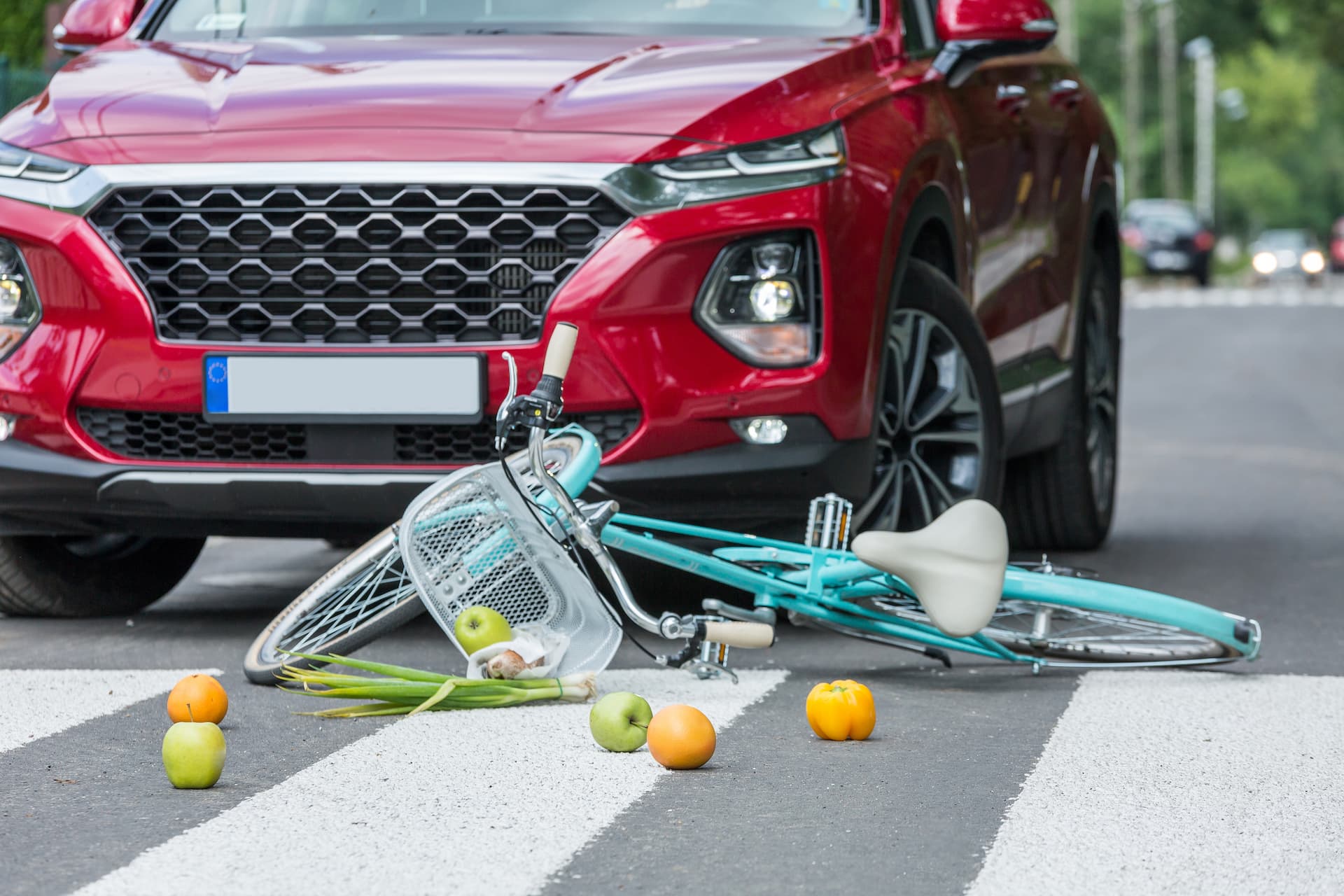
Cycling in South Florida means sharing roads with drivers who are often not expecting a bicycle. Most riders have a story about a close call. The ones who end up calling us are the riders for whom it stopped being close.
Being Outnumbered on the Road
The core problem is not usually malice. It is that many drivers are not looking for something narrow, quiet, and moving at a speed that does not match their expectations. That produces a recognizable set of collisions: the right hook at an intersection, the driver pulling out of a driveway, the door opened into a bike lane, the pass with far too little clearance.
Each has its own evidence and its own defense. A door-opening case turns on where the bike was and how much room there was. A right hook turns on relative position and signaling in the seconds before the turn. Treating them as one generic category is how these claims get undervalued.
What Gets Said Afterward
Cyclists face a version of what riders face: an assumption that they were somewhere they should not have been. Because the cyclist is frequently the one who is injured and least able to give an account at the scene, the driver's version can become the version.
We work to fix that with physical evidence — the position of the bike, the damage to it, the point of contact on the vehicle — and by finding the people who saw it. In an urban area there are usually more witnesses than the initial report records, because bystanders scatter once an ambulance arrives.
Cameras Are More Common Than People Realize
Many riders now use handlebar or helmet cameras, and where footage exists it can resolve a case almost immediately. If you were recording, preserve the file and do not edit it.
Even without a rider camera, urban routes are heavily observed — businesses, residential doorbell cameras, transit vehicles, and traffic infrastructure. Most of it overwrites within days. We identify and request it early, because this is the category of evidence most often lost by simply waiting.
Transit vehicles are worth mentioning specifically. Buses carry multiple exterior cameras and travel the same corridors cyclists use, so a bus that was simply nearby may have recorded a collision it had nothing to do with. That footage is held by an agency with its own retention schedule and its own request process, and it is routinely missed because nobody thinks to ask within the window.
The Bicycle Itself Is Evidence
Do not repair or dispose of the bike. Frame damage, wheel deformation, and component failure indicate the direction and force of impact, and a bicycle is comparatively easy to store.
The same is true of a helmet that took a hit. It should be replaced for safety, but the damaged one should be kept. Photograph your injuries as they develop as well; road rash and bruising evolve over the first days and look considerably more serious at seventy-two hours than at the scene.
Keep the receipts and any service records for the bike and its components as well. Insurers frequently value a bicycle as though it were a department store model, and documentation of what was actually bought and maintained is the straightforward answer to that.
Injuries and Getting Back On
Cyclists sustain collarbone and wrist fractures from instinctively bracing a fall, hip and pelvic injuries, head injuries, and extensive abrasion. Many riders also lose something harder to put a figure on: the confidence to ride at all, when riding was how they exercised, commuted, or spent their weekends.
That loss is legitimate and we document it. So is the bike, which for a serious cyclist can be worth more than an insurer initially assumes and is frequently written off with a token figure.
If You Were Doored
Being struck by an opening car door is one of the most common ways cyclists are hurt in urban areas, and one of the most contested.
These cases turn on where the bicycle was and how much warning existed. Riders are frequently told they should have anticipated it, which ignores that a door can open in front of a rider with no time to react at any reasonable speed.
The physical evidence is usually decisive: damage to the leading edge of the door, the point of contact on the bicycle, and where the rider came to rest. That evidence is straightforward to capture on the day and effectively gone once the car is repaired.
Group Rides and Organized Events
South Florida has an active riding community, and collisions during group rides raise questions that solo incidents do not.
There are usually many witnesses, which is an advantage, though they scatter quickly and are often strangers to one another. Getting names before everyone disperses is worth a great deal. Several riders may be hurt in a single incident with different injuries and different positions in the group, and multiple cyclists may have recorded footage from different angles.
If you were part of a group when it happened, tell us early. That footage and those witnesses are the strongest asset these cases have, and they become hard to reach within days.
Working With Our Firm
We handle bicycle injury claims on contingency, so there is no cost to talk and no attorney fee unless we recover for you. We represent riders across Miami-Dade and Broward, in English and Spanish.
If a driver hit you, call us before the surrounding video cycles and before anyone throws away your damaged equipment.