Bus Accidents: How we help

Founder & Principal Attorney
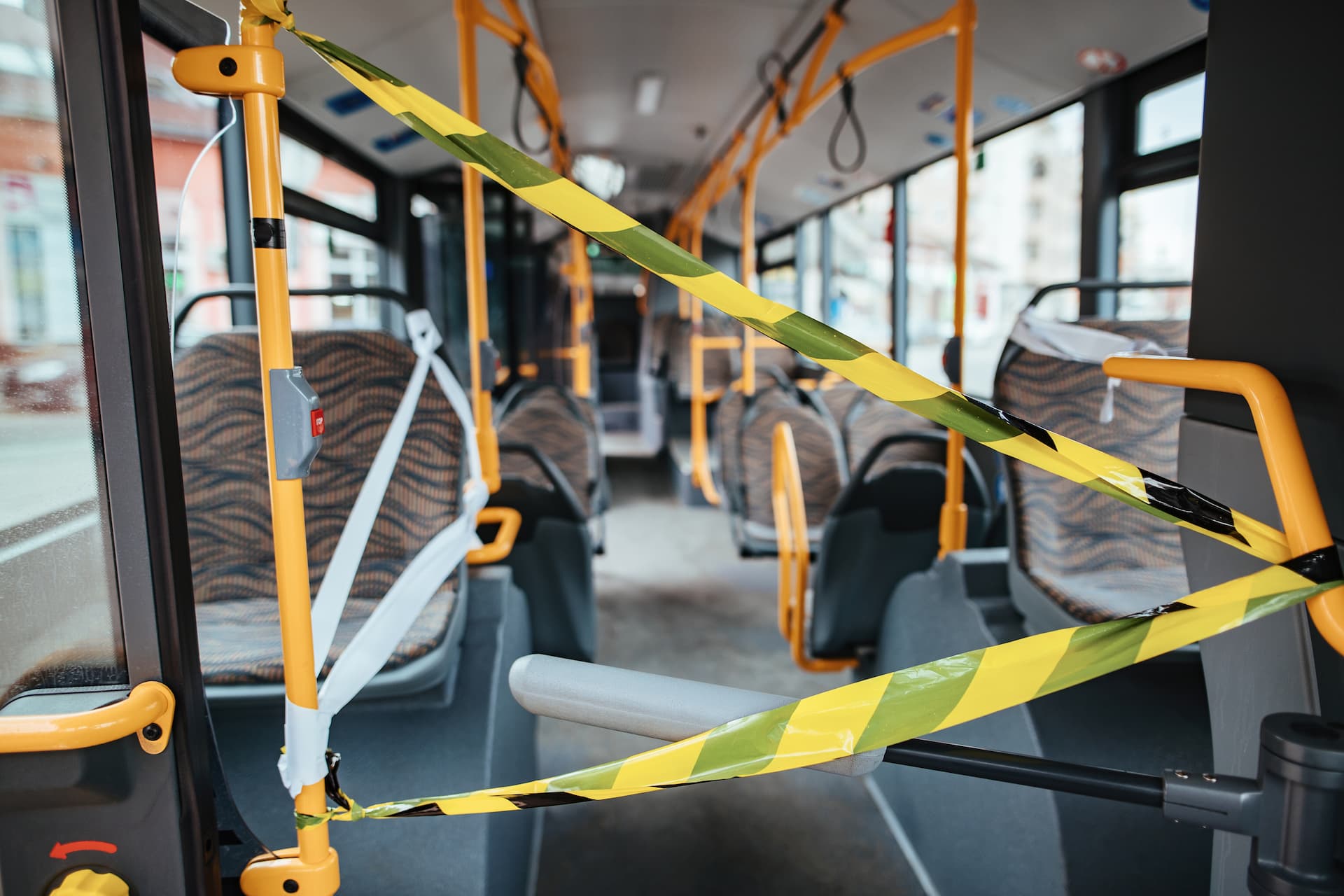
Buses carry people who are not wearing seatbelts, often standing, in a vehicle that stops and starts constantly in heavy traffic. When something goes wrong, a single incident can injure many people at once.
Who Operates the Bus Changes Everything
The most consequential early question in a bus case is who was operating it, because the answer determines how the claim proceeds.
Public transit is operated by a government agency. School transportation is run by a district or a contractor working for one. Private operators run charters, tour buses, hotel and airport shuttles, and employee transport. Each of these categories is handled differently, and claims involving public entities in particular carry notice requirements and timing considerations that do not apply to private companies.
This is not a distinction a passenger can be expected to know, and getting it wrong early can cost a claim entirely. It is among the first things we establish.
Injuries Without Restraints
Most buses have no seatbelts for passengers, and many passengers are standing. In even a moderate collision or a hard braking event, people are thrown against seats, poles, windows, and each other.
That produces injuries at speeds that would be minor in a passenger car — head injuries from striking fixed surfaces, fractures from falls within the vehicle, and spinal injuries from being thrown. Injuries also occur without any collision at all, when a driver brakes sharply or accelerates while people are still moving to their seats.
Boarding and alighting is another common mechanism, particularly for older passengers, involving steps, gaps, and doors closing early.
The Video Is Usually There
Buses are among the most heavily recorded vehicles on the road. Most carry multiple interior cameras and several exterior views, and many transit vehicles also record telemetry showing speed, braking, and door operation.
This is a real advantage, and it has a deadline. Footage is retained on a cycle and then overwritten, and agencies and operators generally do not preserve it simply because someone was hurt. A request has to be made, addressed correctly, within the retention window.
We do this immediately. Exterior footage is also worth pursuing even when the bus was not involved in the collision, since a bus that was merely nearby may have recorded it.
If you were a passenger, note the vehicle and route number and the approximate time before you leave. Transit fleets are large, and footage requests are made against a specific vehicle over a specific window. A request that cannot identify the bus is frequently answered with nothing at all, and by the time the right vehicle is identified the retention period has often passed.
Many Passengers, One Incident
Bus cases frequently involve numerous injured people, which creates dynamics that do not arise in a two-car collision.
Passengers often do not know each other and disperse before anyone collects names, so witnesses to your injury may be unreachable within an hour. If you can, note who was around you and where they were seated. Where a number of people are claiming from the same incident, the timing and thoroughness of each claim can matter.
Passengers are also in a strong position on fault, having done nothing but ride, which means these cases usually turn on injury and causation rather than blame.
School Buses and Children
Incidents involving school transportation carry their own considerations.
Children may not report an injury, either because they do not want to make a fuss or because they do not connect symptoms to what happened. Injuries frequently occur outside the vehicle — at stops, crossing in front of the bus, or in the loading zone. Responsibility may sit with the district, a contractor, a driver, or another motorist who passed a stopped bus.
If your child was involved in any incident with a school bus, it is worth a conversation even if they said they were fine at the time.
Tour Buses and Hotel Shuttles
South Florida's visitor economy runs on buses that are not transit and not school transportation, and these have their own characteristics.
Tour operators, charter companies, hotel shuttles, airport transfers, and cruise transfers move enormous numbers of people, often driven long hours on tight schedules. Passengers are usually visitors who leave the state within days, which makes gathering witness information at the scene unusually important.
Responsibility can involve the operator, a company that chartered the vehicle, a hotel or venue that arranged it, and sometimes a maintenance contractor. Sorting that out early is what makes these claims workable.
Drivers, Hours, and Maintenance
Beyond the collision, the operator's records frequently explain how it happened.
Driver hours matter, particularly for tour and charter operations where long days are normal. Qualification files show what the company knew about the driver. Maintenance and inspection records show whether known defects were repaired, deferred, or ignored. Dispatch and scheduling records show the timetable a driver was working against.
We request this material as a matter of routine, because a bus collision is often the visible end of a chain of decisions that were documented long before.
Working With Our Firm
We handle bus and transit injury claims on contingency, with no fee to talk and no attorney fee unless we recover for you. We work throughout Miami-Dade and Broward, in English and Spanish.
Because public operators carry timing requirements that private ones do not, call promptly. Establishing who ran the bus is quick, and it determines what has to happen next.