Golf Cart Wrecks: How we help

Founder & Principal Attorney
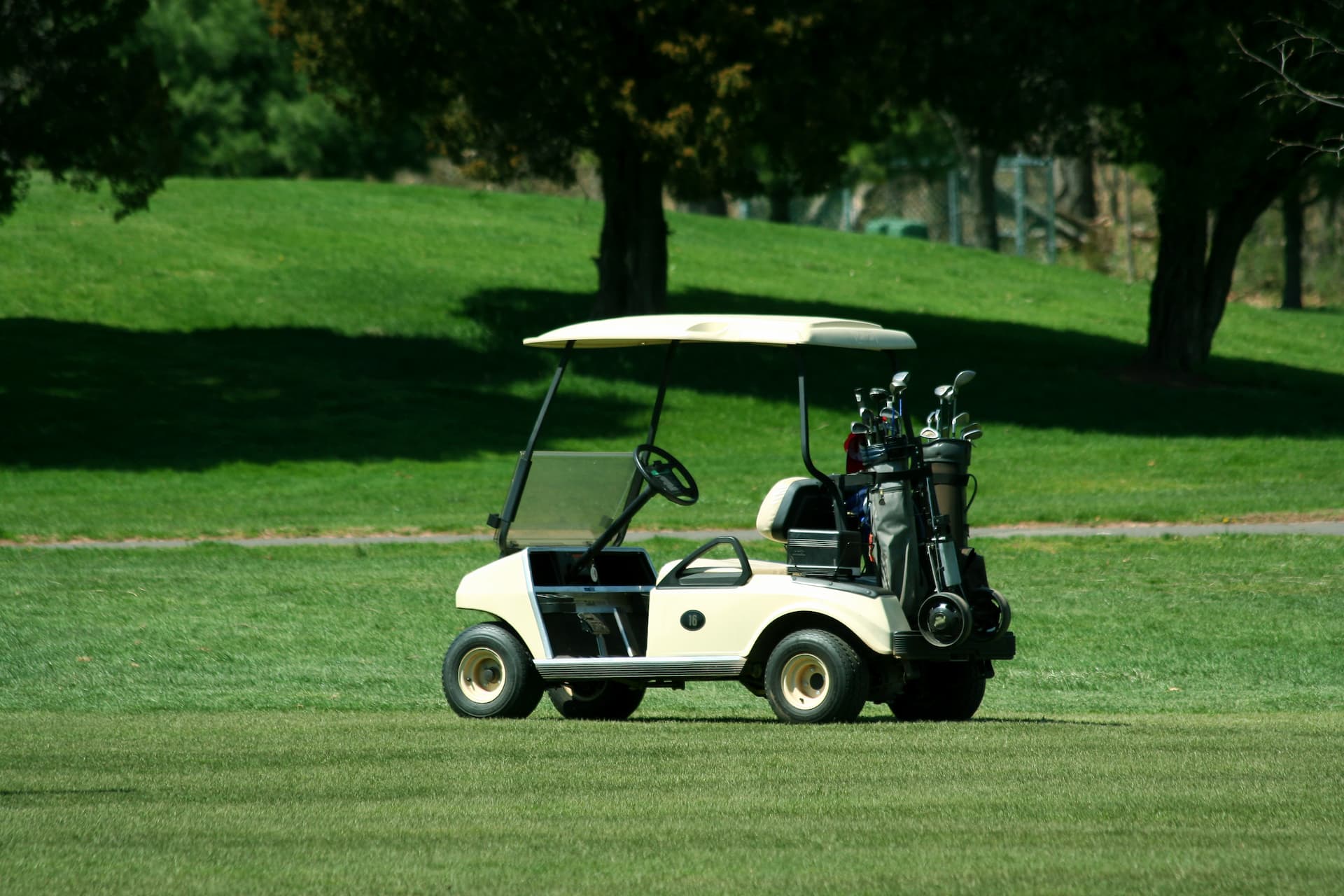
Golf carts are treated as harmless, and in much of Florida they are used as ordinary transportation — to the store, to a restaurant, to a neighbor's house — on real roads shared with real traffic. The injuries they produce are not harmless at all.
Almost No Protection at All
A golf cart has no doors, no seatbelts in most cases, no airbags, and no structure around the occupants. People sit on a bench with an open side, and often the seat faces backward.
At even modest speeds, a sharp turn or a sudden stop ejects people. Occupants land on pavement with nothing between them and the ground. Head injuries, fractures, and serious abrasion are common from incidents that never involved another vehicle.
Because it happened in a golf cart, people often assume it cannot have been serious, and that assumption delays treatment.
Who Was Driving, and Whether They Should Have Been
Golf carts get handed to people who would never be given car keys, and children driving carts is extremely common in communities where they are the normal way to get around.
Where an inexperienced or underage driver was operating, questions arise about who permitted it and who owned the cart. A parent, a homeowner, a community, or a business that made the vehicle available may be part of the picture depending on the circumstances.
Alcohol is also a recurring factor, again because a cart is not perceived as a real vehicle.
Where the Incident Happened
Location shapes these cases substantially.
On a golf course, the questions involve course design, cart path condition, slopes, and whether the operator was trained. In a residential community, they involve the roads themselves, intersections shared with cars, and any rules the community set about cart use. On a public road, the cart is interacting with traffic that may not expect it and may not see it, particularly at dusk.
Resorts, hotels, and large venues that provide carts to guests or use them for their own operations form another category, where an employer or operator may be responsible for how the vehicle was used.
Path and roadway conditions matter as much as the cart. Cart paths with steep camber, blind crossings where paths meet roads, missing signage, and inadequate lighting all contribute, and responsibility for them sits with a course, a community, or a municipality rather than with anyone in the vehicle. Documenting the location promptly is worthwhile, since these conditions are frequently improved after an incident.
The Insurance Question Nobody Considers
This is where these cases most often become complicated, and it catches people out.
A golf cart is frequently not covered the way a car is. Depending on the circumstances there may be homeowners coverage, a community policy, a business policy, or a specific vehicle policy — or considerably less coverage than anyone assumed. Families sometimes discover after a serious injury that the arrangement they took for granted is not what they believed.
Working out what coverage exists is early, essential work in these cases, and it is a large part of what determines whether there is a meaningful path forward.
Low-Speed Vehicles Generally
Beyond golf carts, similar issues arise with the broader category of low-speed and neighborhood vehicles, utility vehicles on properties and job sites, and resort shuttles.
They share the same features: minimal occupant protection, operators with little training, use around pedestrians, and coverage that is frequently unclear. The analysis is much the same regardless of what the vehicle is called.
Children in Carts
A large share of serious golf cart injuries involve children, either driving or as passengers.
Children stand, ride facing backward, hang off the sides, and are ejected in turns that an adult would ride out. In communities where carts are ubiquitous, this is normal daily behavior and the risk is invisible until something happens.
We handle these cases with the additional care they need, including the requirements around settlements involving minors, which we manage so families do not have to.
The Cart Itself
Carts are frequently modified, and modification is a recurring factor in these cases.
Lift kits change the center of gravity and make rollovers more likely. Speed modifications take a vehicle beyond what its brakes and handling were designed for. Added seating, particularly rear-facing benches, puts people in positions the cart was never built to protect. Worn tires and brakes go unaddressed because carts are not inspected the way cars are.
Where a cart was modified or poorly maintained, whoever did the work or was responsible for upkeep may be part of the case. Photograph the cart and preserve it if you can, because it is usually back in service within days.
Communities, Resorts, and Employers
Many carts are provided rather than owned by the person driving.
Residential communities operate fleets and set rules about who may drive and where. Resorts and hotels shuttle guests and staff. Golf courses hand carts to players with no assessment of capability. Employers use carts and utility vehicles on large properties, warehouses, and job sites.
In each case an organization decided who could use the vehicle, under what conditions, and how it was maintained. Those decisions are documented, and they matter more than the moment of the incident itself.
Working With Our Firm
We take golf cart and low-speed vehicle claims on contingency, so there is no cost to talk and no attorney fee unless we recover for you. We work throughout South Florida, in English and Spanish.
If someone was hurt in a cart, do not assume it was minor or that nothing can be done. Both assumptions are frequently wrong, and the coverage question in particular benefits from being looked at early.