Premises Liability: How we help

Founder & Principal Attorney
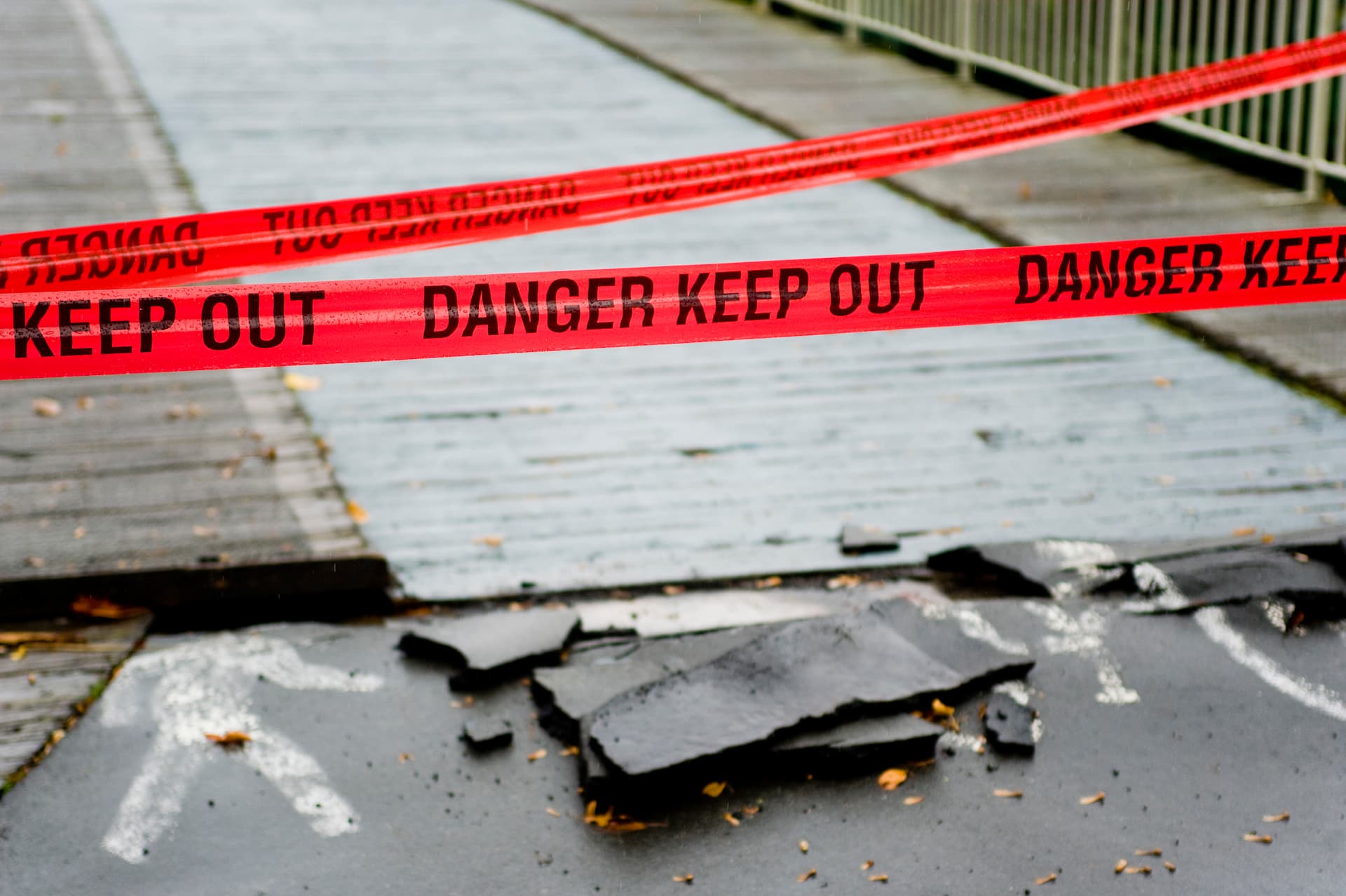
Premises liability covers a wide range of situations that share one question: whether the condition of a property caused a preventable injury, and whether whoever was responsible for it should have addressed the problem.
What Ties These Cases Together
Falls are the most familiar example, but the category is much broader. Injuries from broken stairs or railings. Ceilings, fixtures, or merchandise that fall on someone. Inadequate lighting in a stairwell or garage. Pool and spa hazards. Doors and gates that malfunction. Electrical faults. Structures that fail under normal use.
The common thread is a condition that existed on a property, that someone was responsible for, and that could have been fixed or guarded before anyone got hurt.
The Question of Who Was Actually Responsible
This is more complicated than it looks and it is often where these cases are won or lost. A retail space may be leased, with the tenant responsible for the interior and the landlord for the structure and common areas. A condominium involves an association, a management company, and individual unit owners with different obligations. Maintenance, landscaping, security, and elevator servicing are frequently contracted to outside companies.
We work out who actually controlled the area where you were injured, because directing a claim at the wrong entity wastes time you may not have. Leases and service contracts often answer this, and they are not documents anyone volunteers.
Establishing What Was Known
The central issue is usually notice — whether whoever was responsible knew about the hazard, or should have.
Sometimes that is direct: a prior complaint, a work order, an inspection that flagged the problem. Sometimes it is established by how long the condition existed, since a hazard present for weeks is one a reasonable inspection should have caught. Sometimes it is inherent in the design, in which case notice is not really in dispute at all.
We pursue maintenance records, prior incident reports, complaint logs, and repair histories for the location. A property that has heard about the same problem before is in a materially different position than one facing a genuine one-off.
Where a property uses an outside contractor for maintenance, inspection, or repair, that company keeps its own records, and those are frequently more candid than anything the property produces about itself. A vendor documenting a recurring problem to justify its own invoices creates exactly the history a claim needs. Identifying those contractors early is part of why we push to obtain the service agreements rather than relying on what the property chooses to hand over.
Evidence That Has a Short Life
Physical conditions get repaired, and a repair is not preserved for anyone's benefit. The broken step is replaced within the week. The dark stairwell gets a new fixture. The loose railing is tightened.
Photographs taken on the day, before anyone fixes anything, are enormously valuable. If you were not able to take any, tell us early so that we can try to capture the condition before it is corrected or document that it was.
Where a repair has already happened, that is not the end of it. Work orders, invoices, and the contractor who performed the job all document what the condition was before it was corrected. A repair made days after an injury is itself a record that something needed repairing.
What the Property's Insurer Will Say
The responses are predictable: that the hazard was open and obvious, that you were not watching where you were going, that you had no business being in that area, that nobody knew about it, or that your injury predates the incident.
We meet these with records rather than argument, which is the reason we push to obtain them early rather than waiting to see what the other side does.
Hotels, Resorts, and Short-Term Rentals
South Florida's visitor economy generates a distinct category of these cases, and they come with their own complications.
Guests are frequently injured days before flying home, which splits medical treatment across states and leaves an incomplete record here. Responsibility may sit with an operator, a management company, a franchisor, or an owner who lives elsewhere entirely. Short-term rentals add a platform and a host who may have no professional maintenance arrangement at all.
Being a visitor does not weaken a claim, and going home does not end one. We handle these matters for people who were injured here and are now recovering somewhere else.
Documenting What the Injury Changed
Insurers evaluate premises claims heavily on medical records, which capture diagnoses well and daily life poorly.
A knee injury reads as a line in a chart. What it means is that you cannot manage the stairs in your own home, that you have stopped doing something you did every weekend, that someone now helps you with things you never needed help with. None of that appears in a billing code.
We ask clients to keep a simple record of what they cannot do and what they have given up. It takes very little effort and it consistently makes a difference to how a claim is valued.
Working With Our Firm
We take premises cases on contingency — no fee to talk, and no attorney fee unless there is a recovery. We represent people hurt on commercial and residential property throughout Miami-Dade and Broward, in English and Spanish.
If you were injured by something unsafe on someone else's property, call before the condition is repaired and the record of it disappears.