Scooter Accidents: How we help

Founder & Principal Attorney
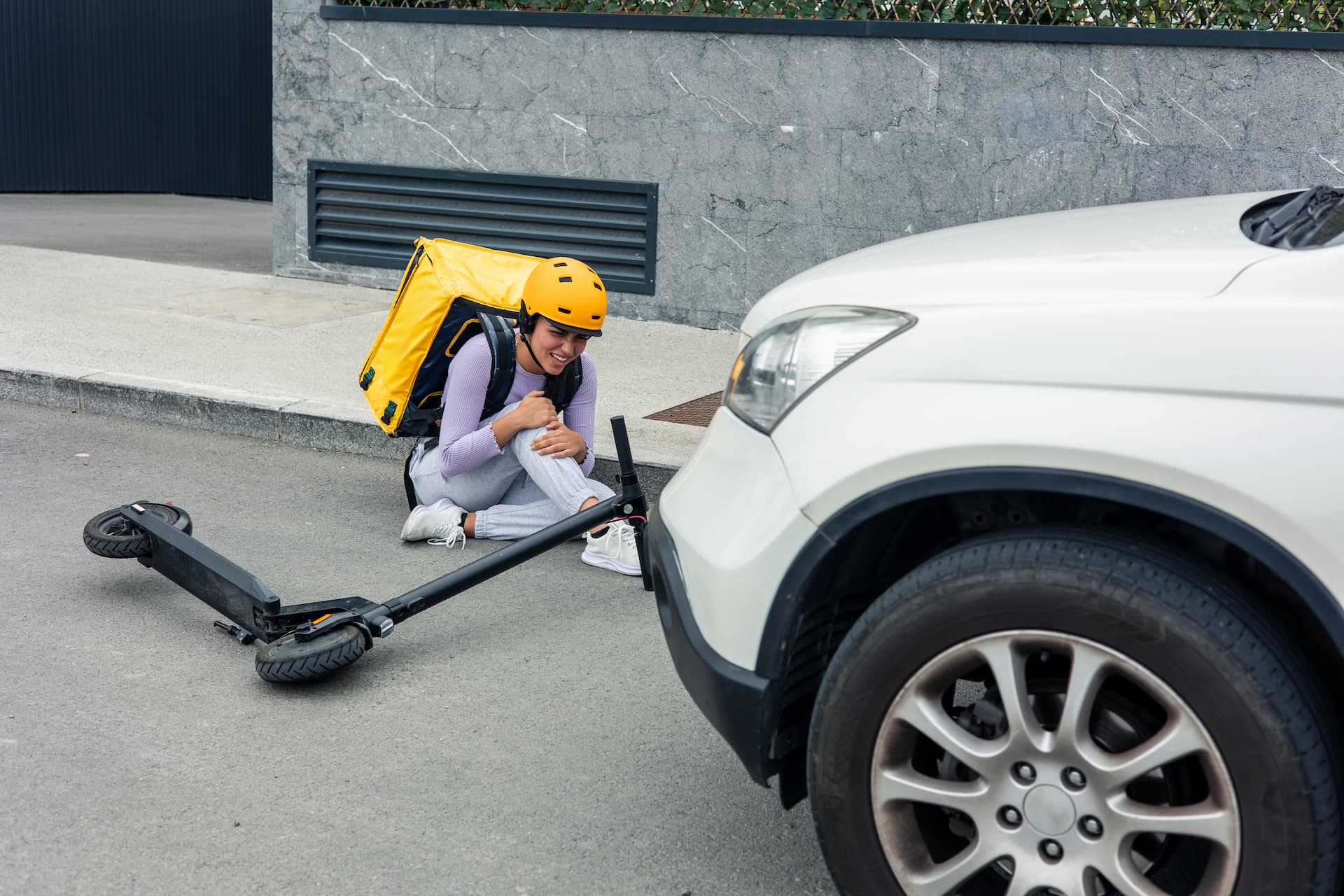
Rented electric scooters appeared on South Florida streets faster than anyone worked out where they belonged. They are too fast for sidewalks, too exposed for traffic, and ridden mostly by people who have never used one before.
A Vehicle Nobody Was Trained For
Almost everyone on a rental scooter is a first-time or occasional rider, frequently a visitor, often navigating unfamiliar streets while holding a phone.
Scooters have small wheels that are unforgiving of pavement defects, a high center of gravity, and braking that behaves differently from anything most riders have used. A pothole, a raised slab, a drainage grate, or a patch of sand that a bicycle would roll over can stop a scooter wheel completely and throw the rider over the handlebars.
That mechanism produces a characteristic injury pattern: facial and dental injuries, wrist and forearm fractures from bracing, shoulder injuries, and head injuries in riders who almost never have helmets.
Riders, and People Struck by Them
These cases divide into two quite different groups.
Riders are injured by drivers who do not see them, by road defects, by scooter malfunction, or by another rider. Pedestrians are struck by scooters on sidewalks and in crossings, and those injuries are frequently serious, particularly for older people who are knocked down.
Both matter, and both require identifying who is responsible — which, with a rented vehicle operated by a stranger who rides away, can be genuinely difficult without moving quickly.
Identifying the Rider or the Scooter
If a scooter struck you, get the scooter's identification number if you possibly can. Every rental unit carries a visible number, and it links to the account that rented it.
That number is the single most useful piece of information available, and it takes seconds to photograph. Without it, identifying who was riding becomes considerably harder. If the rider stopped, get their details as well, and note the operator whose branding is on the scooter.
For riders, photograph the scooter and its number, the location including any road defect involved, and your injuries.
The Agreement You Accepted in the App
Every rental involves accepting terms through an app, generally without reading them, and those terms typically attempt to limit the company's responsibility in various ways.
The existence of such terms does not automatically end a claim, and how much weight they carry depends on the circumstances and on what actually went wrong. If a scooter was mechanically defective, that raises different questions than a rider losing control.
We look at what was actually agreed, what the company knew about that unit, and what maintenance it had. Rental operators hold trip data, maintenance logs, and prior reports about specific scooters, and that material is worth requesting early.
Road Defects and Who Maintains the Road
Because scooters are so sensitive to surface conditions, the state of the road is central in a way it rarely is for cars.
Where a defect caused a fall, the question becomes who was responsible for that stretch of pavement and whether they knew about the problem. That may be a municipality, a county, a private property owner, or a contractor working on the road. Claims involving public entities carry notice requirements and timing considerations that make early action particularly important.
We also document the defect immediately, because road repairs happen and the evidence disappears.
Visitors and Treatment Elsewhere
A large proportion of scooter riders here are visitors who are injured and then fly home within days.
That does not prevent a claim, and it does not require returning to Florida to pursue one. It does mean the medical record gets split across states, so we help clients keep it coherent and obtain what is needed from providers wherever they ended up.
Helmets and the Argument About Them
Almost nobody rents a scooter and puts on a helmet, and expect that to be raised.
The question of what a rider was wearing is a familiar one across every kind of two-wheel case, and it is answerable. The absence of a helmet does not explain why a driver turned across someone's path or why a section of pavement was left broken for months. It is a separate question from how the collision happened, and it is worth keeping them separate.
We deal with this argument regularly and it does not come as a surprise.
Sidewalks, Bike Lanes, and Where Scooters Belong
Much of the conflict involving scooters comes from genuine uncertainty about where they are supposed to be.
Riders use sidewalks because the road feels dangerous, which puts them among pedestrians at speeds that are not safe there. Riders who use the road share space with drivers who do not expect them. Bike lanes, where they exist, are often discontinuous, ending without warning and pushing riders into traffic.
Local rules on this vary, and rental operators do not reliably communicate them. Establishing where the rider actually was, and why, is usually central to the case, and it is worth documenting the layout of the location before anything about it changes.
Working With Our Firm
We handle scooter claims on contingency for riders and for people struck by them, with no fee to talk and no attorney fee unless we recover. We work across Miami-Dade and Broward, in English and Spanish.
If a scooter was involved in your injury, call promptly. Trip records, maintenance logs, and road conditions all become harder to establish with time.