Spinal Cord Injury: How we help

Founder & Principal Attorney
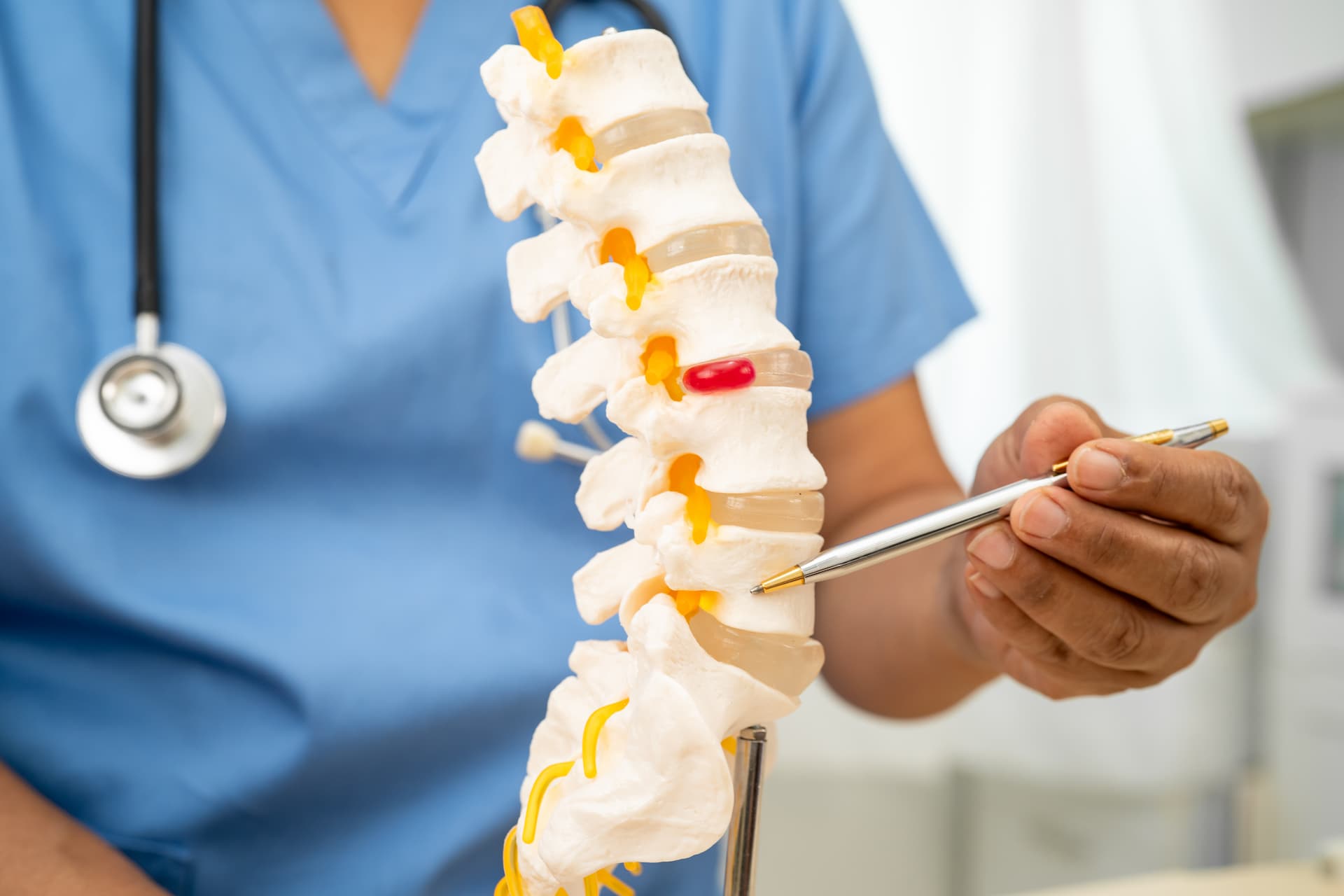
Spinal cord injury is among the most consequential things that can happen to a person, and it happens in an instant. The medical facts are usually established quickly. What takes far longer to understand is what it will mean over a lifetime.
Complete, Incomplete, and Why the Distinction Matters
Spinal cord injuries differ enormously in their effects, and the differences are not intuitive.
An injury may be complete, with no function below the level of injury, or incomplete, with some signal preserved. The level itself determines what is affected — cervical injuries can affect arms, hands, and breathing, while injuries lower down may leave upper body function intact. Two people described with the same term can have very different capabilities and very different needs.
This matters for a claim because it determines everything downstream. Generic assumptions about what a spinal injury involves consistently understate what a particular person requires.
The Effects That Are Not About Walking
Public understanding of spinal cord injury focuses on mobility, which is a small part of it.
Bladder and bowel function are frequently affected and require lifelong management. Autonomic regulation, including blood pressure and temperature, can be disrupted. Neuropathic pain is common and can be severe and treatment-resistant. Pressure injuries are a persistent risk carrying serious consequences. Respiratory function may need ongoing support. Sexual function and fertility are affected and are rarely discussed openly.
These require continuous medical management for the rest of a person's life, and a claim that accounts only for a wheelchair has accounted for almost nothing.
What a Lifetime Actually Requires
Establishing the real cost means itemizing decades of need, and the total is routinely far higher than people expect before it is worked through properly.
There is equipment, which wears out and is replaced on cycles — wheelchairs, cushions, transfer aids, and increasingly technical systems. There is attendant care, which may be several hours a day or around the clock. Home modification for accessible bathrooms, ramps, doorways, and surfaces. Vehicle modification or accessible transportation. Ongoing therapy to maintain function. Medications and supplies. And the medical complications that carry a statistically higher likelihood over a lifetime.
We work with life care planners and treating specialists to build this in detail rather than estimating it.
Work, Income, and Capability
Many people with spinal cord injuries work, and it is important that a claim not assume otherwise. But the analysis is more involved than whether employment is possible.
It may mean a different field entirely, after retraining. It may mean fewer hours because of fatigue or a care schedule. It may mean losing a physical trade that took years to build and starting over at a lower income. Accessible transportation and workplace accommodation affect what is realistically available.
Vocational assessment establishes what earning capacity actually remains, which is usually a more nuanced answer than either side's first assumption.
The Household Around the Injury
Spinal cord injury reorganizes a family. A partner frequently becomes a caregiver, which changes the relationship as well as their own working life. Homes are sold because they cannot be adapted. Family members provide hours of care that would otherwise be paid for.
That care has real economic value even when it is given freely, and families are often surprised to learn it should be accounted for rather than quietly absorbed.
The First Year and the Question of Recovery
The early period after a spinal cord injury is dominated by uncertainty about how much function will return, and that uncertainty is genuine.
Some recovery is common in the first year, and its extent is difficult to predict early. This is precisely why resolving a claim during that window is so hazardous: a settlement reached in month four is based on an unknown, and the answer arrives long after the claim has closed.
We work to relieve the financial pressure that pushes people toward early settlement, so that the decision can be made when the medical picture is actually clear.
Accessible Housing in South Florida
Home modification is one of the largest single costs in these cases, and it is frequently underestimated.
Older housing stock here often cannot be adapted at reasonable cost — doorways too narrow, bathrooms too small, and multi-level layouts. Many families end up relocating rather than modifying, which is a much larger expense than a set of ramps. Condominium and association rules can constrain what modifications are permitted at all.
Establishing what accessible housing actually costs in this market, rather than using a generic figure, materially changes what a claim is worth.
Health Over Decades
Living with a spinal cord injury carries elevated risk of specific complications, and a claim should account for them because they are foreseeable rather than speculative.
Pressure injuries can require extended treatment and surgery. Urinary tract infections recur and can become serious. Respiratory complications are more likely, particularly with higher-level injuries. Cardiovascular and bone density changes follow reduced mobility.
Good management reduces these risks substantially, and good management is itself an ongoing cost. Either way, they belong in the projection.
Working With Our Firm
We handle spinal cord injury cases on contingency, so there is no fee to speak with us and no attorney fee unless we recover. We represent injured people and families across Miami-Dade and Broward, in English and Spanish.
If you or a family member has sustained a spinal cord injury, do not resolve anything before the long-term picture is understood. That understanding is what stands between an adequate outcome and one that runs out.