Truck Accidents: How we help

Founder & Principal Attorney
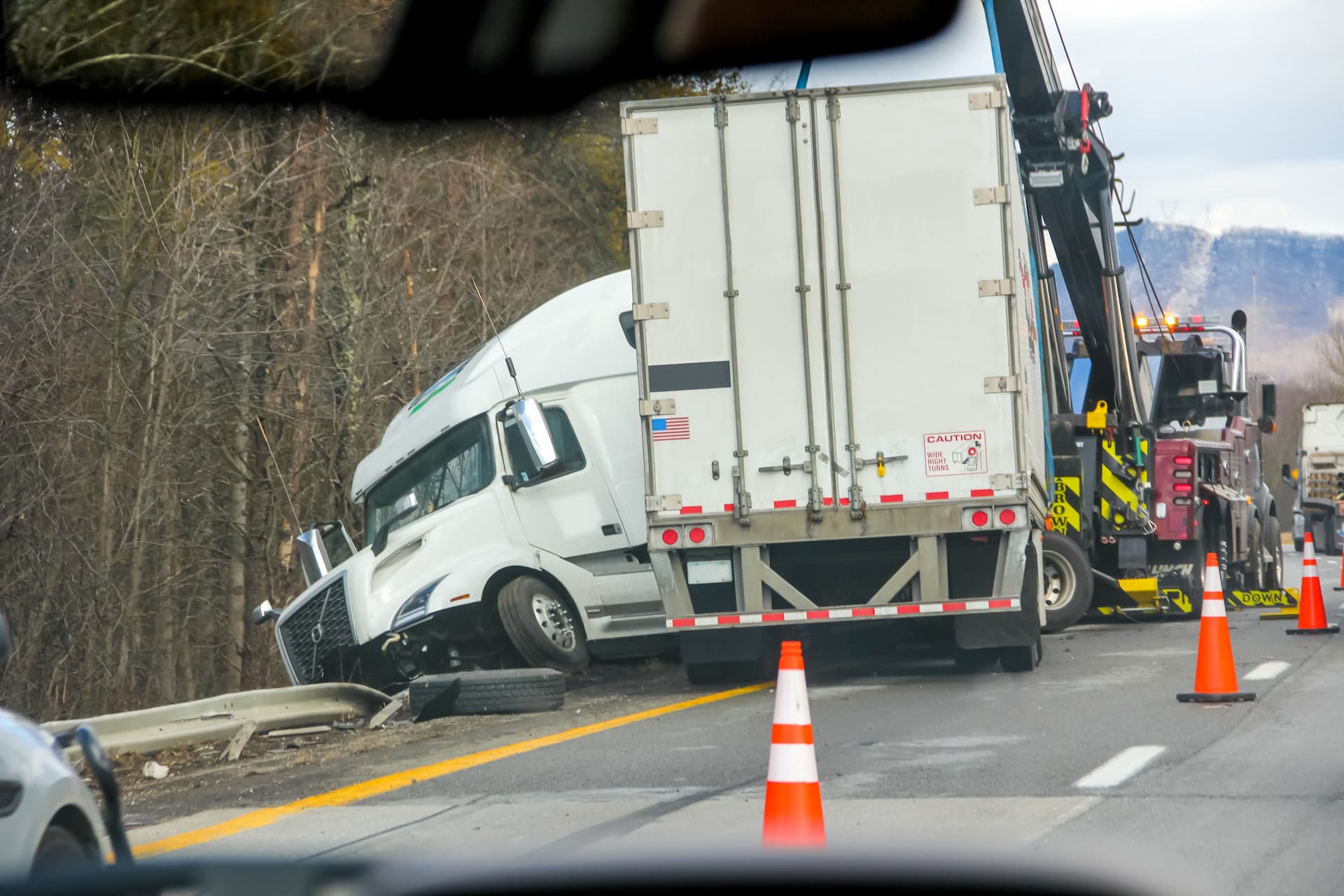
A collision with an eighteen-wheeler is not a car accident with bigger vehicles. The forces are different, the injuries are more severe, and on the other side there is usually not one driver but a company with its own investigators, its own lawyers, and a rapid response process that begins before the road reopens.
A Truck Case Is Not a Bigger Car Case
When a passenger car and a tractor-trailer collide, the weight difference alone dictates the outcome. Occupants of the smaller vehicle absorb forces their car was never designed to manage, which is why these cases so often involve spinal injuries, head trauma, and long hospital stays rather than the soft-tissue complaints common in ordinary fender benders.
The response is different too. Many carriers dispatch an investigator to significant crash scenes immediately, sometimes arriving while the vehicles are still in place. That team photographs the scene, interviews the driver, and begins assembling the company's version of events on day one. An injured person, still in an emergency room, has nobody doing the same for them. Our job is to close that gap as fast as we can.
The Companies That May Share Responsibility
One truck can connect to a surprising number of businesses, and identifying them changes what a case looks like. The driver may be an employee or an independent contractor. The tractor and the trailer are frequently owned by different companies. The freight may have been loaded by a third party at a warehouse nobody at the scene has heard of. Maintenance may be handled in-house or contracted out entirely.
Sorting out these relationships is one of the first things we do, and it is not something you can determine by looking at the truck. The name painted on the door is often not the company whose decisions caused the collision.
Electronic Data and Why We Move Fast
Modern commercial trucks generate a substantial amount of data. Engine control modules record speed, braking, and throttle position in the moments before an impact. Electronic logging devices track hours behind the wheel. Many fleets run forward-facing and driver-facing cameras. Dispatch systems hold the messages that show what the driver was being asked to do and by when.
This information is enormously useful and it does not sit around indefinitely. Systems overwrite on their own cycles, vehicles are repaired and returned to service, and records get archived. We send preservation demands to the carrier promptly for exactly this reason, and we would far rather send one too early than discover months later that the data no longer exists.
Maintenance and Hiring Records
Beyond the crash itself, a carrier's paperwork often tells a story. Inspection and repair histories show whether known problems were addressed or deferred. Driver qualification files show what the company knew when it put that person behind the wheel. Trip records show the schedule the driver was working against.
We request these materials as a matter of routine. Sometimes they show a company doing everything properly, and that is useful to know early. Sometimes they show a pattern, and a pattern changes a case substantially.
Injuries in Commercial Vehicle Collisions
Because of the energy involved, truck cases tend to produce injuries that require ongoing care rather than a course of treatment with a clear end. Spinal injuries, traumatic brain injuries, orthopedic damage requiring surgery, and injuries that permanently change what work a person can do are all common.
Valuing that properly takes more than adding up existing bills. It means understanding what future care will cost, what the injury does to earning capacity over a working lifetime, and what daily life actually looks like now compared to before. We work with treating physicians and, where appropriate, specialists who can project long-term needs, so that a settlement accounts for the years ahead rather than only the months behind.
Because a loaded tractor-trailer can weigh many times what a passenger car weighs, the same collision that would bruise someone in a two-car crash can end a career here. That difference in scale is why these files rarely close quickly.
If the Carrier Has Already Contacted You
Trucking companies and their insurers often reach out quickly, sometimes within a day or two, and the approach is usually courteous. They may offer to cover your rental, ask for a brief recorded statement, or propose an early payment to resolve things.
Treat that contact as the beginning of their case, not the beginning of yours. A statement given while you are medicated and shaken becomes a permanent document. An early offer arrives before anyone knows whether you will need surgery, which is precisely why it arrives early.
You are not required to give a recorded statement to the other side's insurer. If someone has already contacted you, tell us what was said and what you signed, if anything. It is almost always workable — it is simply better handled early than discovered late.
Working With Our Firm
We take truck cases on contingency. There is no cost to have us look at what happened, and no attorney fee unless we recover for you. If a carrier's investigator has already contacted you or asked for a statement, that is a good reason to call us first.
We represent people injured throughout Miami-Dade, Broward, and the surrounding counties, and we work in English and Spanish. If a commercial vehicle was involved in your crash, reach out sooner rather than later — with these cases, the calendar genuinely works against you.